GERTY Component
🌐 KR
| Overview
The basic structure of GERTY components follows the Rhino Grasshopper architecture. They feature GERTY-specific functions and allow users to configure values for required parameters. The UI for configuring required parameters is broadly divided into 7 types, supporting data types such as String, Number, Boolean, and Color. Once the input and required parameter values are defined, they are processed and passed to the output.
| Input
This parameter requires an external input and can be configured by connecting a Rhino/GERTY component with a matching data type. Inputs consist of both required and optional values. Optional parameters can be left empty; when left unconnected, the component will turn gray, indicating normal operation.
(1) Data Match
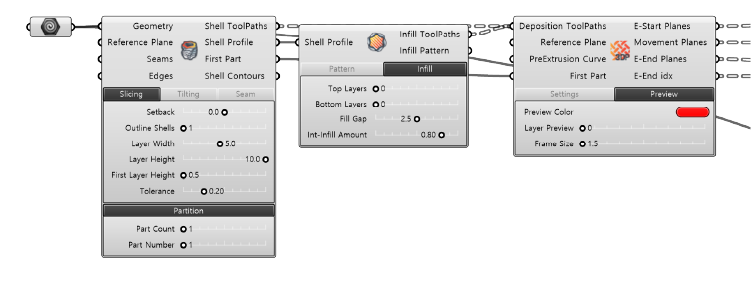
The basic value connection method is identical to standard Grasshopper components. GERTY specific parameters exist and can be connected and used according to data matching rules.
(2) Mode Option
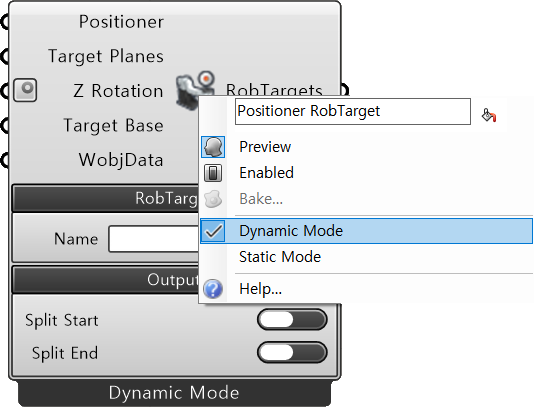
For certain components, it is possible to switch component modes or add functions. You can check this by right-clicking on the component icon. The applicable components are as follows:
ToolData,WobjData,Positioner RobTarget,SeamData,WeldData,TPSiSynergic,TPSSynergic,ABB Positioner,ABB Robot,WorkBench,Code Solver,Solid Shell,Surface Shell,RePath Tree
Example
| Required Parameter
It must be included in the component value, but can be overridden by the user.
(1) Category Tab
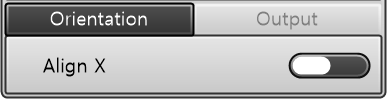
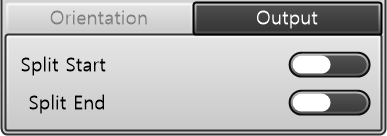
Options are grouped into [Tab]s based on their functions to allow detailed access to specific category settings. The selected [Tab] is highlighted in a darker color, allowing users to customize the related settings. Any required parameters that are not customized will follow the default values set by GERTY.
Example
a. Text Field
The data type is String. It is primarily used to set user-defined variable values. In the case of the Code Solver, it is used to specify the saved file name and project name. Users can edit or input text by double-clicking on the Text Field. Note that the input value must start with an English letter, and special characters or blank spaces are not allowed.
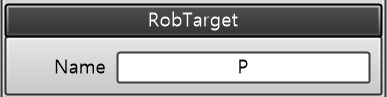
b. Numeric Value (Slider)
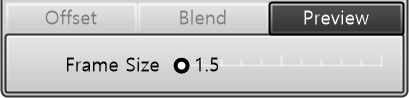
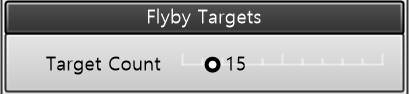
The data type is Number, which is broadly divided into Double and Integer. Users can change or input values by dragging the pointer on the Slider Bar left/right or by double-clicking it.
Double
Accepts decimal values, including integers.
Integer
Accepts only positive integer values.
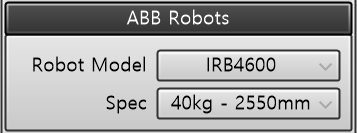
c. DropDown
The data type is String. Users can select models or options provided by GERTY. For Tool/WorkBench models, objects exported by the user can be saved and loaded into GERTY.
d. Button / Toggle Switch
The data type is Boolean. A button temporarily reactivates the state of a component. A toggle completely switches the state of a component. In some components, input values and required parameters may be added or removed dynamically.
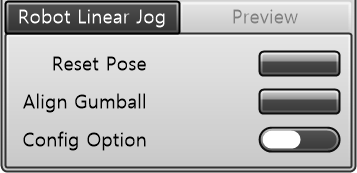
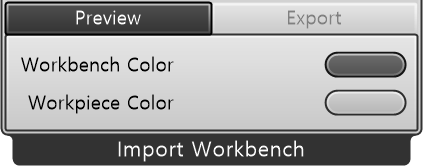
e. Color Swatch
The data type is Color. Allows users to customize the color of the active model or path in the simulation.
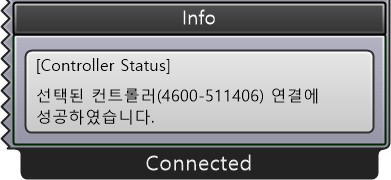
f. Panel
The data type is String. When the component is active, it displays the component’s output values through a panel.
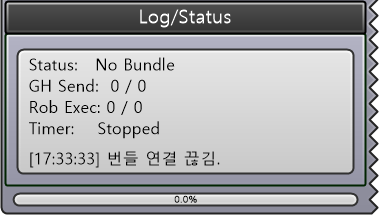
g. Process Gauge
For components that require a certain amount of time for data processing, this visually shares the progress with the user. Located at the very bottom of the component, it displays the progress as a percentage (10% etc.).
| Outputs
When input values and required parameters are successfully processed, the results are exported according to the corresponding output data values.